Child Health
Autism
Home / Autism


Autism – Overview
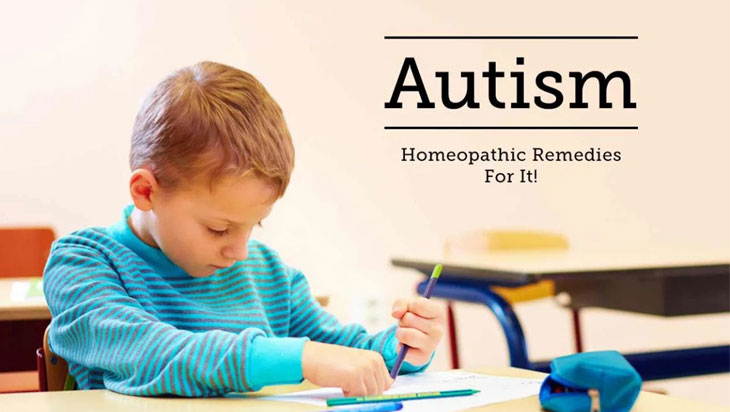
Autism is a syndrome that leads to disturbance in a child’s behaviour and normal development. Typically, a parent will observe that their child is different from other children of his/her age group in the way he/she behaves, speaks (or the lack of it) and performs daily activities as compared to an average child.
Autism is usually diagnosed by the age of three. It is a lifelong disorder caused by abnormal neurological development. It is one of five pervasive developmental disorders (PDDs) that also include Asperger’s syndrome, childhood disintegrative disorder, Rett syndrome and pervasive development disorder not otherwise specified (PDD-NOS), which are now classified as autism spectrum disorders.
Autism spectrum disorders are developmental disabilities that cause difficulty in social interaction, communication and limited or repetitive activities.
People with autism react differently to stimulations such as touch, sound, light, etc.; and have some amount of mental retardation. They are also at a risk of developing epilepsy. Autism affects every aspect of behaviour; lack or delay in speech, poor non-verbal communication, repetitive movements, minimal eye contact, diminished interest in being sociable, lack of spontaneity and insight, and fascination with sparkling objects, amongst other things. Some children with autism can be very aggressive and may land up injuring themselves with behaviours like banging their head against the wall or biting themselves. Interestingly, many children with autism have an average or above average IQ.
Many autistic children, however, are able to show their feelings and emotions like average children, but in different ways. However, not all children with autism can express their emotions and feelings.
Some children with autism have developmental difficulties such as speech, which is why it becomes difficult for them to initiate or carry out conversations.
With timely homeopathic treatment, many autistic children are able to learn and function better.
Incidence
-
According to a scientific report, autism spectrum disorders affect 1 among every 68 children in the United States of America.
-
It is estimated that the overall prevalence increases by about 10 to 17% each year.
-
Autism spectrum disorders occur almost 4.5 times more often in boys.
-
The cause of autism is unknown.
-
Even though the disorder results from abnormalities in the structure or function of the brain, the underlying cause usually cannot be identified.
-
Patients with autism have abnormalities in several areas of the brain.
-
According to a recent study, approximately 11% autism cases may be linked to genetic problems.
-
According to a report, a link between fever/flu during pregnancy and autism among new-borns was observed.
-
Symptoms of autism are usually seen during early childhood, and autism is diagnosed by the age of three.
-
The symptoms intensify in various degrees from one child to another.
-
The reaction to external factors like light, touch and smell can be normal, over-reaction or under-reaction. Normal touch may be experienced as very painful, normal smell may be very unpleasant to the child, and daily noises may be very disturbing too. On hearing loud noises – for instance, a vacuum cleaner – they may end up crying inconsolably.
-
They may appear indifferent to their surroundings.
-
They are happy to be alone.
-
They do not have much interest in toys, like other children.
-
They do not respond to others when an attempt is made to talk to them.
-
They are not able show or point out their interests to others.
-
Their activity levels fluctuate; they have a tendency to become hyperactive and, by contrast, inactive.
-
They do not like being cuddled or hugged.
-
Children with autism are usually not able to speak normally; because they cannot express themselves clearly, they tend to use gestures instead of words.
-
Some children develop abnormal speech, which is not recognised by others.
-
They tend to talk repetitively and use the same words over and over.
-
They are known to throw tantrums.
-
They may get too attached to certain objects.
-
They cannot maintain eye contact.
-
Some children do not fear apparent dangers.
-
As they are not able to respond to normal methods of teaching, they need special schools.
-
physical examination (may include neurological examination)
-
medical history (includes family history, birth history and records of early development)
-
medical tests (to rule out other conditions)
-
physicians use various screening tools to evaluate their development, communication and language skills and interaction with others
Autism – Causes
Autism – Symptoms
Autism – Diagnosis
Autism is usually diagnosed by the age of three. Early diagnosis and treatment often helps to improve the outcome for patients.
Diagnosis includes the following:
How to manage a child with autism
Homeopathic treatment is recommended with the following therapies as per the child’s needs:
Occupational therapy: this helps the child to be independent by teaching basic skills like dressing/undressing, hygiene and cleanliness.
Physical therapy: this helps the child perform regular physical exercise to develop better control over body movements.
Behaviour modification: there are several methods of behaviour modification that help overcome problems of repetitive and aggressive behaviour. Behaviour modification helps children with autism master necessary skills required for daily functioning.
Sensory integration therapy: this is a type of behaviour modification that focuses on helping children with autism deal with problems of external stimulation, such as pain, touch, noise, smell, etc. The child is given repeated exposure in a designed way in order to develop an appropriate response towards certain stimulations.
Play therapy: this type of behaviour modification is used to improve emotional development, social skills and learning. It involves an interaction between the child and an adult, which is controlled by the child.
Communication therapy: this helps in developing communication skills for children who are not able to communicate verbally. It also helps autistic children develop language and speech.
Autism – Treatment
A study has demonstrated the usefulness of homeopathic treatment in the management of neuropsychological dysfunction in childhood autism. Homeopathic medicine in childhood autism disorders has shown significant reduction in hyperactivity, behavioural dysfunction, sensory impairment as well as communication difficulty. This was demonstrated well in the psychosocial adaptation of autistic children. Autism is a serious developmental disorder and demands the administration of homeopathic medicines through a holistic perspective. The aforementioned research demonstrated that homeopathy helps autism very successfully.
Why Dr H.M. Soni?
At Dr.H.M.Soni Homoeopathic Hospital we have a team of doctors working extensively in the treatment of special children. We also have very senior paediatricians on our medical advisory board. Constitutional homeopathic medicines have proved to improve child development and behavioural skills. With proper homeopathic treatment, we are able to improve the behaviour and concentration of autistic children. The overall goal of treatment is to reduce the child’s symptoms, help them integrate better into society, and live a happier and more meaningful life.
Myths and facts:
People with autism do not want friends:People with autism struggle with social skills, which may make it difficult for them to interact with their peers. They might seem shy or unfriendly, only because they are unable to communicate their desire for relationships the way others do.
People with autism cannot feel or express any emotion-happy or sad.: Autism does not make an individual unable to feel the emotions you feel; it just makes the person communicate their emotions (and perceive your expressions) in different ways.
People with autism cannot understand the emotions of others: Autism often affects an individual’s ability to understand unspoken interpersonal communication. So, someone with autism might not be able to detect sadness solely based on the other person’s body language or, as the case may be, sarcasm in the other person’s tone of voice. That said, when emotions are communicated more directly, people with autism are more likely to feel empathy and compassion for others.
People with autism are intellectually disabled: Often, autism comes with just as many exceptional abilities as limitations. Many people with autism have normal to high IQs, so much that some may even excel in mathematics, music or any other pursuit.
People who display qualities that may be typical of a person with autism are just odd, and will grow out of it: Autism stems from biological conditions that affect the brain’s development and, for many individuals, it is a lifelong condition.
People with autism will have autism forever: Recent research has shown that children with autism can make enough improvement after intensive early intervention to ‘test out’ of the autism diagnosis. Thus, the given evidence reinforces the importance of addressing autism when the first signs appear.
Autism is just a brain disorder: Research has shown that many people with autism also have gastro-intestinal disorders, food sensitivities and many allergies.
Autism is caused by bad parenting: In the 1950s, a theory called the ‘refrigerator mother hypothesis’ arose, suggesting that autism was caused by mothers who lacked emotional warmth. This has long been disproved.
The prevalence of autism has been steadily decreasing for the past 40 years.: The rate of autism has increased by 600% in the past 20 years. In 1975, an estimated 1 in every 1,500 individuals had autism. In 2009, an estimated 1 in 110 had an autism spectrum disorder.